
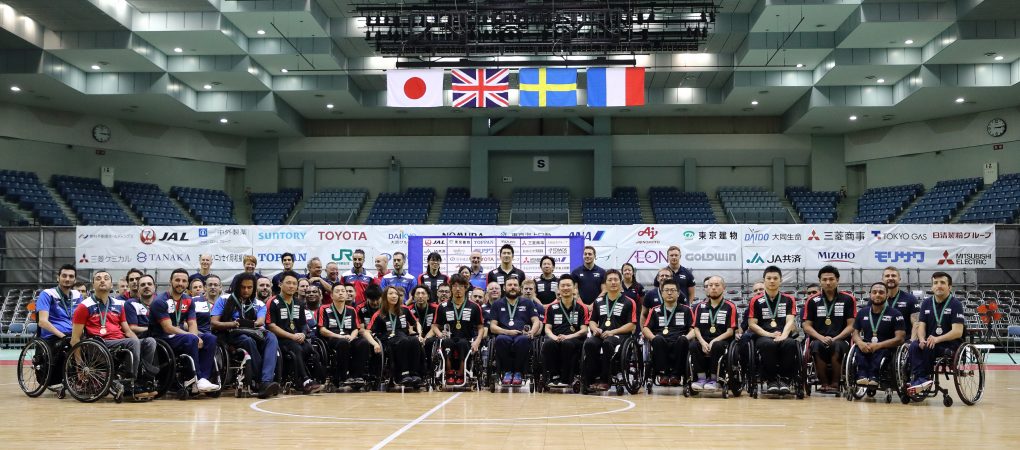
Photo credit: Megumi Masuda
In my first career (wheelchair rugby has unwittingly become my second!), I was privileged to travel the world and experience the wonders of other countries and their peoples. Despite having visited many places around the globe I never visited Japan and my only experience of its people was working alongside the Japanese Defence Force during a maritime exercise in the Pacific, so it was a real joy to be in Japan last week for the very first time. And what an experience it has been!
As a child from a working class family my parents majored on two things, good manners, which my mum said ‘cost nothing’ and the importance of education which my dad said many had fought hard to make available to everyone, and not just to those who could pay. I was reminded of both in Japan. First I was struck by the level of civility I encountered everywhere. Never the pushing and scrummaging I find in London’s busy shops or on the Underground; in Japan people seem to cram into limited space with an awareness and a respect for those around them. Courteous behaviour, humility and selfless hospitality would seem to be the norm and this is reinforced by cultural norms such as bowing when meeting people or saying goodbye. I was also taken by the sense that whoever I met was keen to learn, and to tell me about their own education and careers. Two of the young volunteer female interpreters told me they were engineers in Japan whilst another said she had studied in England and was now an architect. This all got me reflecting, not just on my upbringing, but on our own culture and behaviours which seem by contrast to be far less respectful, with so many of our social encounters characterised by polarised positions and confrontational approaches – you only need to witness the behaviour of MPs in the Commons to see how we seem to have lost all respect for one another and courteous debate. There is a difference between robust challenge and pure bad manners and I regret that sometimes I am aware that I too have stepped over the boundary and in doing so – I usually sense the spirit of my mum softly rebuking me. I think we all have the opportunity to learn a great deal from Japan, its people and its culture during the next few years as they host the big world sporting events of the Rugby World Cup, Olympic and Paralympic Games.
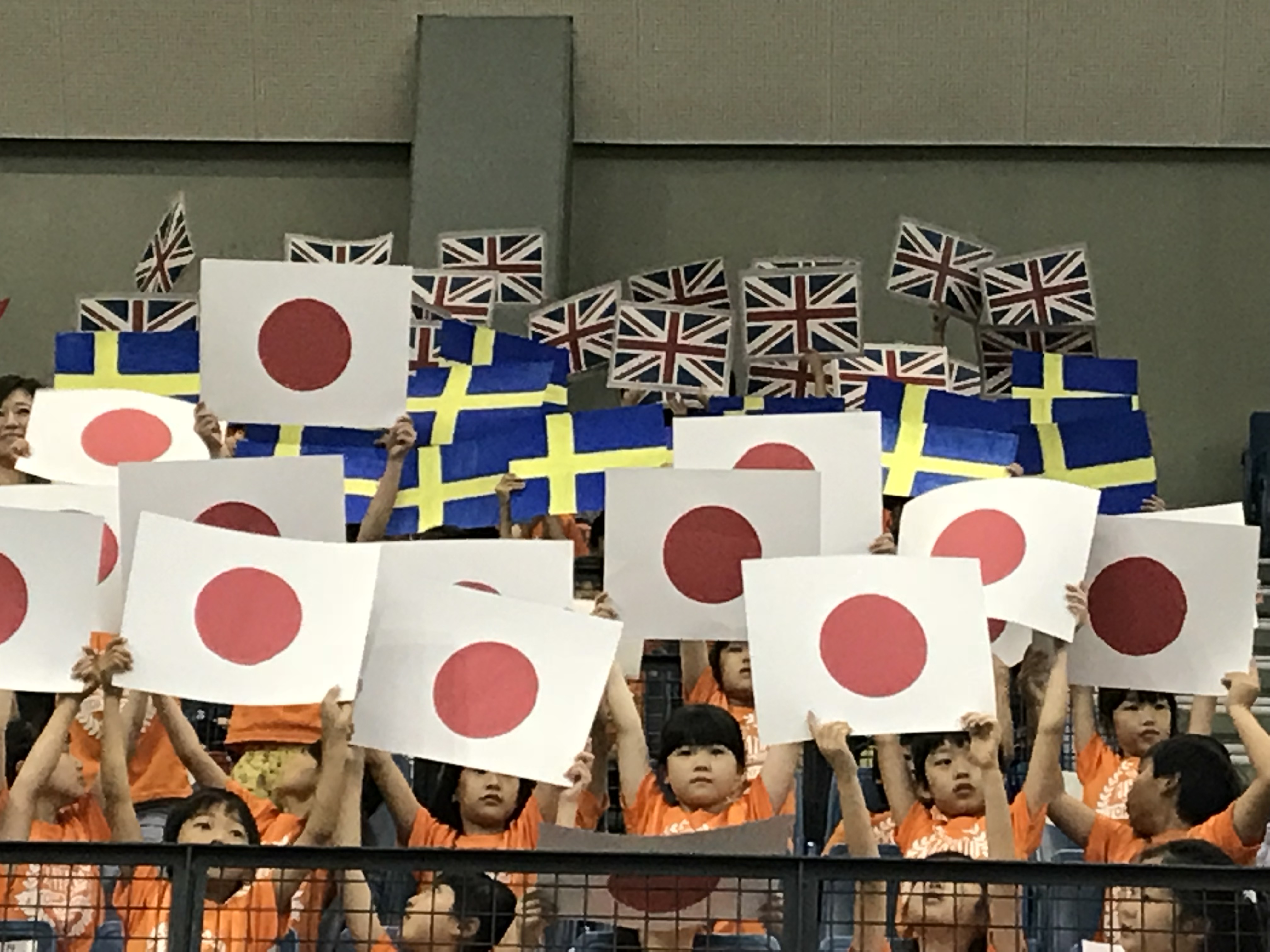
The other thing I was reminded of is the power of sport and its ability to bridge cultural differences and divides. The fact that we may do things differently, speak different languages and enjoy different foods is irrelevant when we come together to play sport. It is not just for the purposes of physical exercise that when a Royal Navy warship arrives in the port of a different country the crew arrange to play sports against local teams. Yes this is important for the physical exercise it allows after a period at sea, but it is also the invaluable opportunity of bringing peoples from different nations together in a shared experience that is important. There is a further dimension to this for those with impairments; sport allows the participant to enjoy and celebrate what he or she can do rather than what not, and this common experience transcends everything, be it race, colour or politics. For me, all of these elements represent the true value, the real worth of sport which can be a powerful enabler of a global community, which is why I strongly believe that funding sport just for medals is a shallow and fundamentally flawed philosophy.
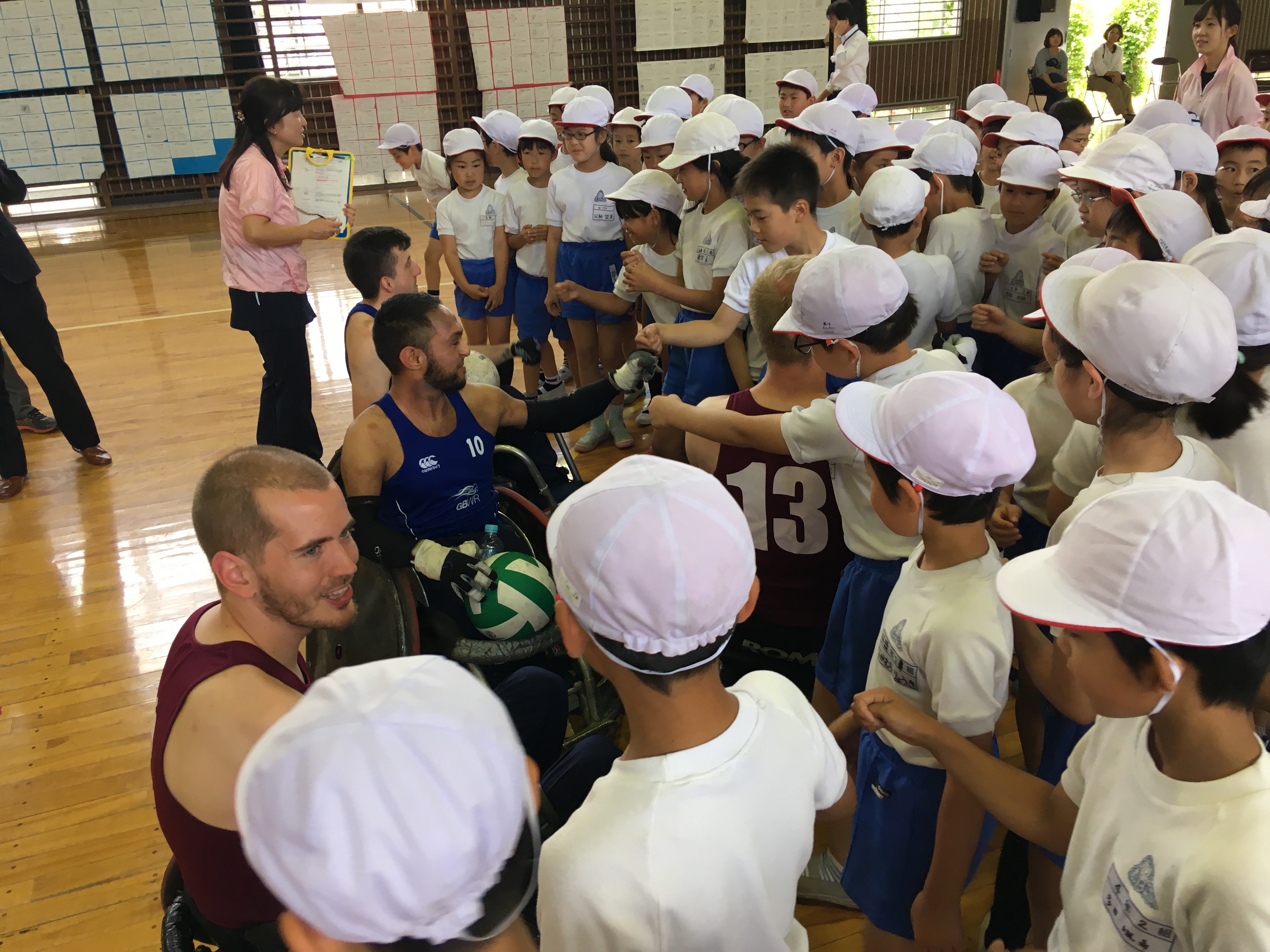
The Japan Para Championships provided GB with the opportunity to increase its familiarity with the country as we near 2020, to test emerging lines and tactics and to take on Japan, the current Paralympic Bronze medallists. The tournament took place in Chiba City, about 40 minutes from Tokyo, where we received the warmest of welcomes. Ahead of the competition some of the team visited local schools where the children enjoyed meeting the athletes and getting into chairs to have a go. Children are largely untarnished by the things that drag adults down, and in Chiba unsurprisingly the school children did the same things and enjoyed the same wheelchair experiences as the children in GB.

Photo credit: Megumi Masuda
The tournament was between Japan, Sweden, France and GB. We won 5 of our 6 round robin matches losing one match to Japan, who at the end of the round robin series had the same games statistics as GB having also lost one match… to us! Most importantly Paul Shaw was able to test a number of lines and combinations as he continues to refine his lines and tactics ahead of this summer’s world championships. So both sides qualified for the final – the third opportunity to play one another during this tournament.

Photo credit: Megumi Masuda
It’s true to say that we were disappointed with our performance in the final itself where we all agree we did not play well. We got off to a poor start having lost the tip off and then when we did get the ball we gave it away without any real pressure on us. Suddenly we were 2 points down with only a couple of minutes played. Japan sensed this and turned the pressure on so that by the end of Q1 it was 12-9 to Japan. Japan upped the tempo further and at half time we were 26-20 down. Q3 was a great quarter to watch – it had everything that makes this game such a spectacle – it was fast, furious and with some huge hits as GB tried to claw themselves back into the game. We battled hard and held our own with the quarter ending 39-33 so no further gain by Japan. Paul Shaw brought a new line on for Q4 – 3.5, 3.0, 1.5. and 0.5. With Aaron and Jim working well together this line had real impact but it was just too late to make any inroads into the score and with a Japanese side with their tails up, buoyed on by a terrific and very vocal crowd, the game ended 53-46 to give the home nation the trophy. To be honest by half time the mountain was probably already too high for us to climb and Japan looked the more composed, accurate and hungry. We all now need to take a short break and reflect on how we get back on track to win at the Worlds in the summer. We will all ask ourselves how we can do things better – individual athletes will need to review their performances, the coaches their game plans and I need to make sure I can provide even better performance services and opportunities to support the team and carry on finding the funding to do so. We are a team; we all want to do well and when we win we all win, and likewise when we lose we all lose. We still return with a silver medal and we will be better from the experience gained from another seven international matches, three of them against one of the best teams in the world. Congratulations to Japan on their impressive performance and win and thank you to Chiba City and the Japanese Para Association for their generous hospitality and an excellent tournament.
David Pond


