
Great Britain Wheelchair Rugby (GBWR) has published a landmark new report highlighting the significant social, health and wellbeing benefits delivered by wheelchair rugby across England, Scotland and Wales.
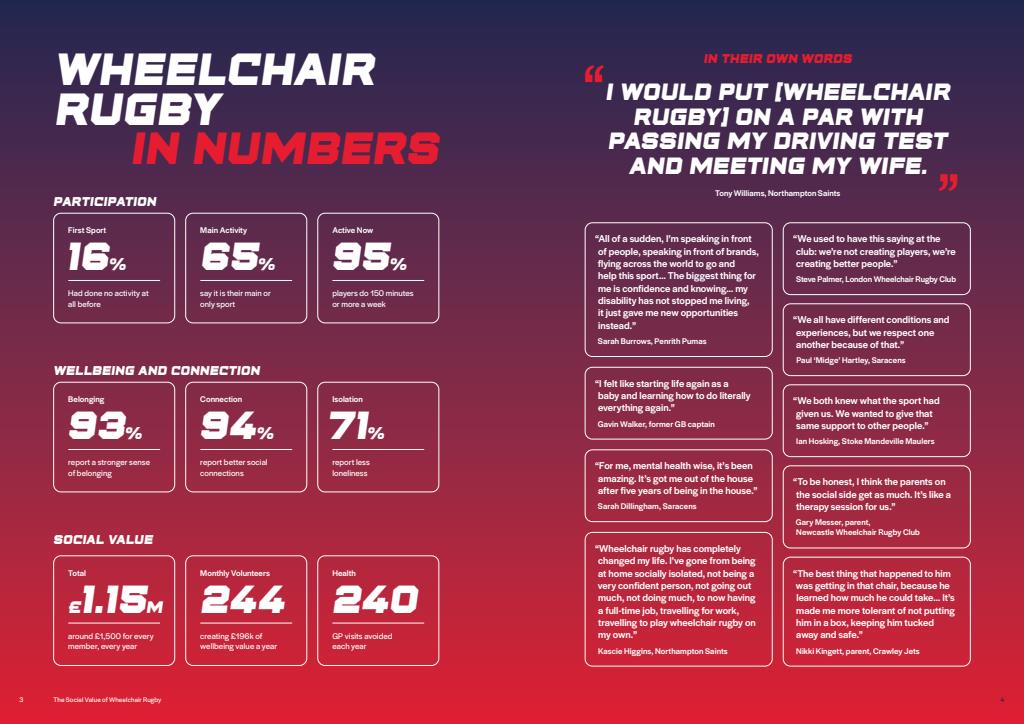
The Social Value of Wheelchair Rugby report found that the sport generates an estimated £1.15 million in social value every year, created through a network of 34 clubs supporting disabled people to become more active, independent and connected within their communities.
Commissioned by GBWR, the research gathered insights from players, volunteers, coaches, family members and supporters across the wheelchair rugby community. The study explored the impact the sport has on physical activity, mental wellbeing, social connection, independence and quality of life.
Key Findings
- 93% of participants reported a stronger sense of belonging.
- 71% reported reduced feelings of loneliness and isolation.
- 95% of players now complete at least 150 minutes of physical activity per week, compared with just 31% before discovering the sport.
- 91% reported positive benefits from learning practical life skills from others with lived experience of disability.
- More than £209,000 of social value is generated annually through the wellbeing benefits experienced by wheelchair rugby volunteers.
More Than a Sport
The report reinforces what players and volunteers across the wheelchair rugby community already know: the sport is about far more than competition.
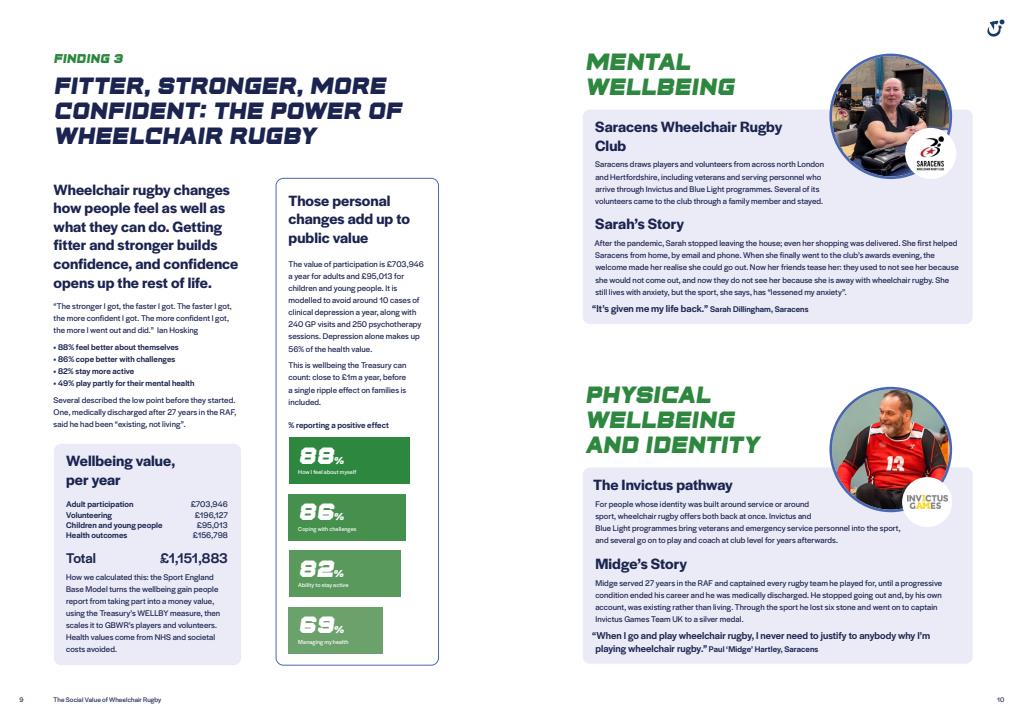
Participants reported improvements in confidence, independence, physical health and mental wellbeing, alongside stronger friendships and support networks. For many people, wheelchair rugby provides opportunities that extend beyond sport, helping individuals develop practical skills, build resilience and live more independently.
The findings also show the important role wheelchair rugby plays in tackling social isolation and creating welcoming communities where disabled people can connect, thrive and achieve their goals.
Supporting Future Growth
While the report celebrates the impact already being achieved, it also highlights barriers that continue to prevent disabled people from accessing the sport.
The research found that only three of 90 surveyed players were formally referred to wheelchair rugby by a health professional. High equipment costs and the need for many players to travel significant distances to participate remain challenges for the sport.
The report calls for stronger links between healthcare services and adaptive sports organisations, greater investment in accessible facilities and equipment, and continued support for the volunteer workforce that underpins wheelchair rugby across Great Britain.
Download the Full Report
Download the Social Value of Wheelchair Rugby Report
Get Involved
Wheelchair rugby is one of the fastest-growing disability sports in Great Britain, with opportunities to play, volunteer, coach and support clubs across England, Scotland and Wales.