
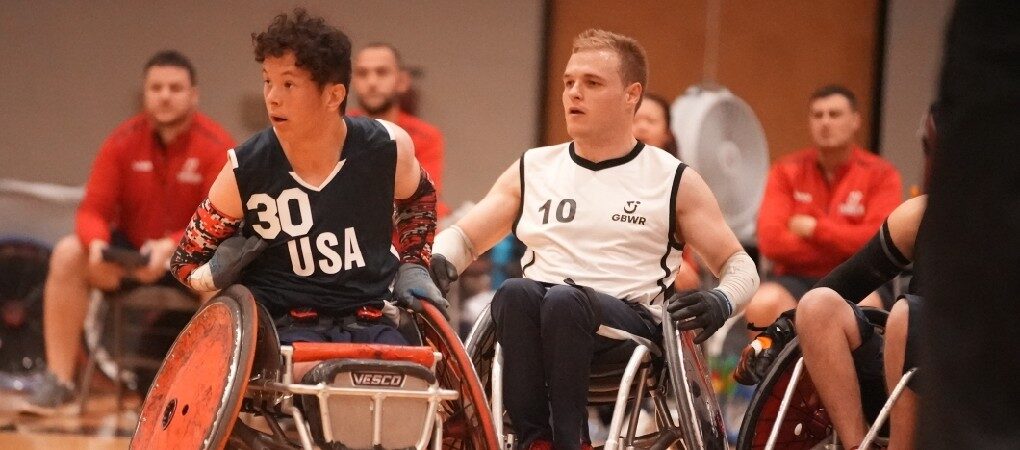
Written by GB Talent athlete George Rogers.
On November 14, I travelled with GBWR Talent to the Lakeshore Foundation in Birmingham, Alabama to take part in a series of friendlies against our American equivalents, USAWR’s Development squad.
It was an honour to be selected for the trip and I immediately became excited about the wide range of experiences it would provide. It would be the first time most of the Talent squad had travelled so far for wheelchair rugby, including myself. Our only previous trip as a team, for the Qufora Egmont Open earlier this year in April, was only a relatively short journey to Odder, Denmark.
I was very eager to apply what we have been learning and practicing in training each month during Talent camps at Lilleshall to improve on our performance at Egmont. We were lucky enough to host the Swedish National Team at our camp in August, many of whom we had faced as part of a club side in Denmark. Talent won three from three and we were immensely proud to have developed greatly as a team in just a few months. It was an experience that filled me with confidence going into our time in Alabama. We knew, though, that despite not being together as a development side for very long, the USA would be formidable opposition and would present us with new challenges.
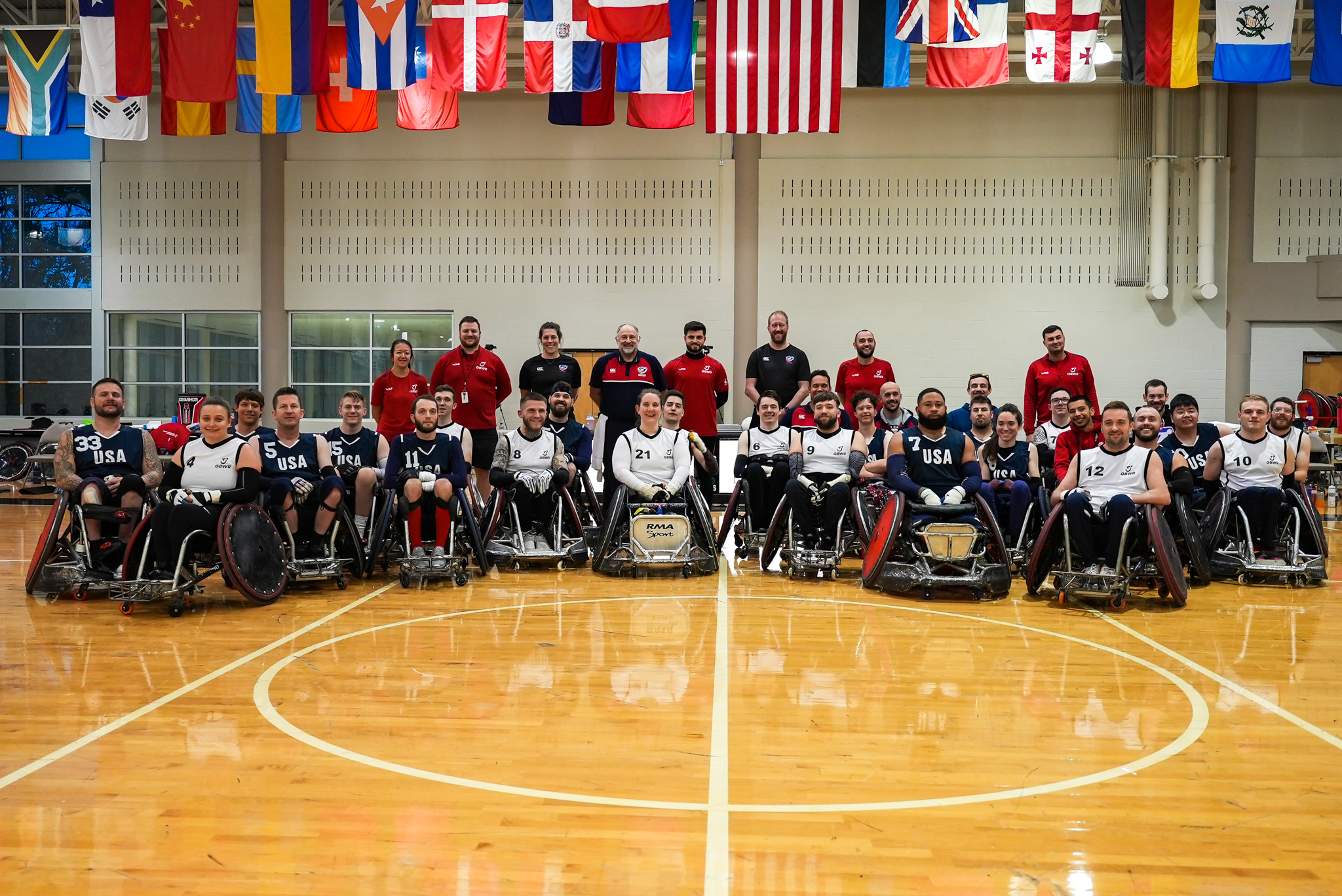
We were able to use the first couple of days at Lakeshore to settle in, adjust to the new time zone and meet our hosts; USAWR’s wonderfully welcoming players and staff. We enjoyed fantastic food, played board games and some particularly competitive rounds of cornhole for our inter-squad trophy the ‘Talentino’ and used the time to go over the game plans we had produced in our lines in preparation, as a team. By the afternoon of our second day, though, we were all itching to finally get in our chairs and play some rugby. We had an initial, low intensity session for an hour that evening, followed by a more intense and focused, three-hour session the next day, after which, we felt ready and excited for our test against the USA.
I believe each game taught each of us something unique and extremely valuable. I, certainly, was facing types of players and styles of play that I hadn’t yet come across and the first game particularly opened my eyes to the great amount of physicality with which the USA play Wheelchair Rugby. Our coaches had warned us to be aware of increased reaching, for example and to protect the ball but only experiencing it could prepare us properly for how we would need to attempt to play as the week progressed. It was a slow start to the first game, but I was pleased with how we adapted to the pressure, showed resilience and fought back in the second half.
With the first game, we began our routine of two games each day from Thursday to Saturday. As we now knew more of what to expect, I believe our confidence grew and our performances improved in many areas over the next two games, culminating in our first and only win of the trip in our third game. I was tremendously pleased to have achieved a win and so proud of the team.
Obviously, we wanted to use the momentum we had to carry on winning as the games went on. Unfortunately, the US adapted well, and we couldn’t capitalise on our success in the remaining games.
I think by the final day of competition, the regularity with which we had played was taking its toll on the team. I know I was definitely feeling both mentally and physically fatigued by the last game, which, despite some great play from both teams, was certainly the least competitive.
Thankfully, we couldn’t dwell on this for too long, though, as our trip to Alabama came to an end with a party. An opportunity to come together with the USA players and staff, talk, eat, play more cornhole and celebrate and wonderful week of rugby. We hadn’t discussed the games with our opponents during the week, so I was pleased to get a chance to look back on our performances through the eyes of the USA.
On reflection, I’ve taken so much from this trip. It has prepared me both on and off court for what to expect from international competition in every aspect. From travel to acclimatisation, preparation, and adaptability. I’ve been exposed to the highs and lows of competitive rugby more completely than I ever have before.


